
MEDIA RELEASES
28 August 2026
SMRT Buses Launches New Mobility Command and Control Centre at Gali Batu Depot under Bus 4.0 Initiative
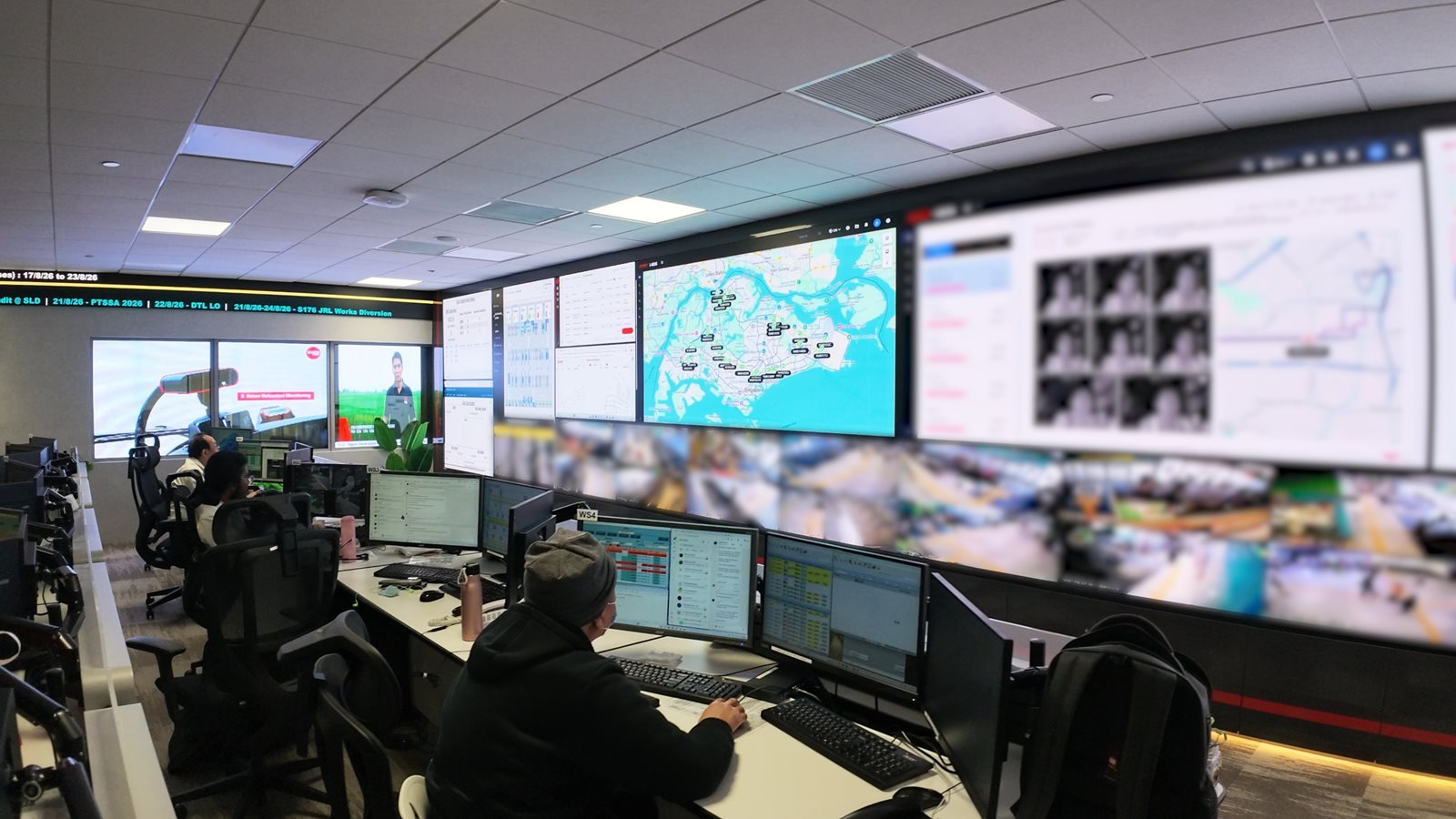
1. SMRT Buses today launched Bus 4.0, a transformation initiative that changes how the operator manages and maintains its fleet. Like an air traffic control tower for buses, the new control centre gives Service Controllers real-time, end-to-end visibility of the fleet. This allows them to identify risks earlier, coordinate responses faster and act before issues affect commuters.
2. Bus 4.0 was launched by Mr Jeffrey Siow, Minister for Transport and Second Minister for Finance. The initiative reflects SMRT Buses' vision for next-generation road transport. It transforms bus operations and maintenance, improves workforce productivity and enhances service for commuters.
3. Built at a cost of $6 million, Bus 4.0 is centred on four pillars: iOCC, iBUS, iWorkforce and iDepot. Please refer to Annex A - Media Factsheet for details.
4. The Mobility Command and Control Centre at Gali Batu Bus Depot, also known as the Intelligent Operations Control Centre (iOCC), is the nerve centre of Bus 4.0. It is the new base for about 40 Service Controllers who were previously stationed at Woodlands and Soon Lee depots. They look after fleet deployment, bus scheduling and recall, and incident response. The iOCC oversees more than 75 bus services and over 1,200 buses operated by SMRT Buses.
iOCC: From Reactive to Preventive Operations
5. In the past, Service Controllers had to scan screens and CCTV feeds manually for unusual road conditions. They also relied on reports from Bus Captains when issues surfaced. As a result, many issues were identified only after they occurred. Service Controllers then had to respond to incidents and guide Bus Captains through them.
6. Bus 4.0 changes this approach. Service Controllers now receive data on buses, Bus Captains and unexpected road conditions. The system automatically detects unusual events and risks, then alerts Service Controllers at the iOCC. With a clearer view of operations, they can identify risks early and act before commuters are affected. This helps prevent incidents instead of responding only after they occur.
iBUS: Safer Journeys Through Early Intervention
7. The foundation for Bus 4.0 was laid in early 2024, when SMRT Buses invested more than $4 million to install the Bus Telematics System across its fleet. This turned every bus into an Intelligent Bus (iBUS).
8. This fleet-wide deployment provides the data backbone for Bus 4.0. Data from the buses flows into the iOCC, where it is augmented by AI-powered monitoring, safety alerts and intervention procedures.
9. When the Bus Telematics System was first introduced, it detected signs of driver fatigue and sounded an audio alert to remind the Bus Captain to stay alert. Bus 4.0 takes this a step further. These in-bus alerts are now sent live to the iOCC. And Service Controllers follow set procedures to contact the Bus Captain, advise the Bus Captain to take a rest break or stop the service, depending on the situation. This closes the loop between detection and action, improving safety for Bus Captains and commuters.
10. When fatigue monitoring was first introduced, the system generated hundreds of alerts daily. Today, it generates about 10 to 20 alerts a day. By making these alerts visible to Service Controllers and working with clear intervention procedures, Bus 4.0 helps Bus Captains develop safer driving habits. The same approach now covers other safety risks, including repeated harsh braking or acceleration and following other vehicles too closely.
More Reliable Journeys Through Predictive Operations
11. Bus 4.0 also flags service irregularities, such as bus bunching, automatically. Previously, Service Controllers used a fleet management system (CFMS) that colour-coded buses along each route. Buses with irregularities were marked in red. Service Controllers had to monitor the system continuously and contact Bus Captains when they needed to adjust the headway between buses.
12. With Bus 4.0, AI continuously monitors the distance between buses and alerts Service Controllers when bunching is likely to occur. They can then act early, such as guiding a Bus Captain to adjust his speed to maintain more regular bus arrival times.
13. Bus 4.0 also brings together existing fleet condition monitoring systems. These include an AI-powered platform that monitors more than 200 vehicle parameters, including braking and electrical systems, battery health and other components. The system identifies potential faults so buses can be recalled early for inspection and repair. Since its implementation, the initiative has helped reduce bus breakdowns by 20 per cent.
One Centre, One Team
14. For the first time, the iOCC also brings together SMRT Buses' operations teams and STRIDES Digital teams, which manage SMRT's digital advertising panels at bus stops, as well as its taxi and private-hire vehicle (PHV) operations. During disruptions, the centre serves as a single command hub for buses, taxis and other mobility resources. For example, during a rail disruption, messages can be displayed on digital panels at bus stops to guide commuters. Taxis and PHVs can also be directed to affected locations to help reduce crowding. By bringing these teams together, the iOCC can deploy resources faster and more efficiently, reducing the impact on commuters.
iDepot: Smarter Depot Operations
15. Bus 4.0 also covers depot operations. The iDepot pillar includes LTA-developed Charging Station Management System (CSMS) for electric buses, inspection robots for automated surveillance, and Internet of Things (IoT) systems that detect equipment deterioration before failures occur. These technologies improve depot productivity, support predictive maintenance and strengthen operational reliability.
iWorkforce: Technology in Service of People
16. Mr Tan Peng Kuan, Managing Director of SMRT Buses, said: "Bus 4.0 helps our people see more, make better decisions and act faster. In the past, we responded to issues after they arose. Today, real-time data, AI-enabled alerts and a central command centre help us identify risks earlier and act before commuters are affected. The data allows us to take practical action and deliver clear results. Just as pilots have an air traffic control tower to guide them, our Bus Captains now have Service Controllers as safety buddies who look out for them on the road. This means safer and smoother journeys for all our passengers."
17. To support this transformation, SMRT Buses has introduced initiatives under the iWorkforce pillar. These initiatives recognise the wider responsibilities of Service Controllers and encourage safer driving among Bus Captains. Service Controllers will receive a monthly skills allowance of $160. It is co-funded by SMRT Buses and NTUC Company Training Committee (CTC) grants, secured in partnership with the National Transport Workers' Union (NTWU). Bus Captains can also use a mobile app to track their daily driving performance. Under a safe driving incentive programme, they can earn vouchers worth up to $600 a year. The programme rewards good driving habits and uses data-based feedback to help Bus Captains drive more safely.
Conclusion
18. Like Depot 4.0, which transformed a 40-year-old SMRT Trains depot into an advanced maintenance facility, Bus 4.0 uses technology and AI in a practical and focused way. The true measure of Bus 4.0 is not the technology itself, but the difference it makes to commuters' daily journeys. This transformation is made possible by our Bus Captains, Service Controllers, technicians and depot staff. Together, they help us deliver the best possible service and experience for commuters.
ANNEX B - SMRT Chairman's opening remarks for Bus 4.0 launch