
MEDIA RELEASES
13 February 2026
LTA and Rail Operators will Progressively Implement Rail Reliability Taskforce Recommendations to Strengthen Overall Network Reliability
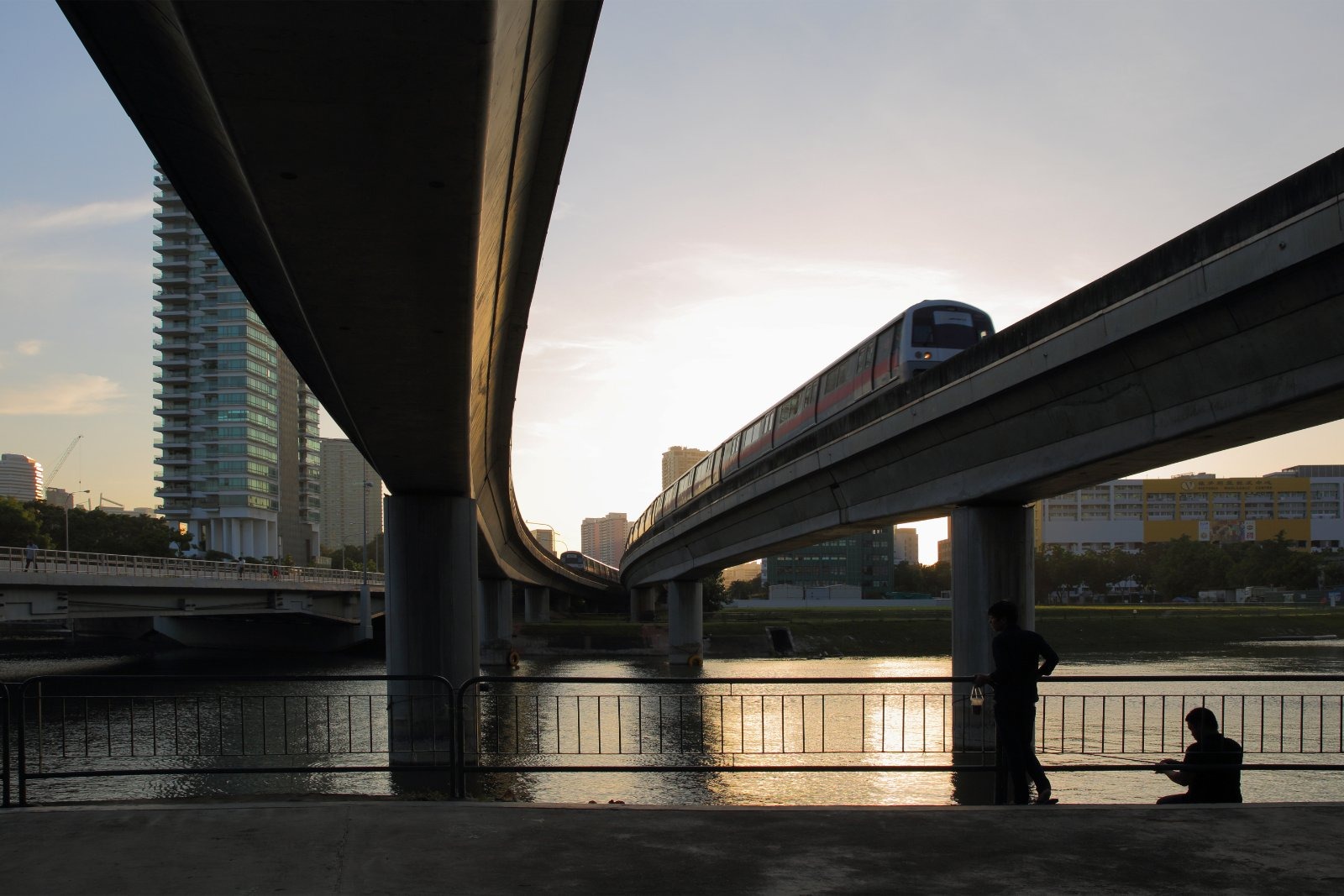
The Rail Reliability Taskforce1 will start implementing a series of recommendations to strengthen rail reliability. These initiatives will be progressively rolled out over the next few years across the rail network.
The Taskforce was formed on 19 September 2025 to develop and implement immediate solutions to improve rail reliability and joint responses to train service disruptions. The Taskforce commenced its review with joint technical audits of systems related to the train service disruptions from July to September 2025. Beyond this, the Taskforce also undertook a comprehensive and in-depth review of rail operations and maintenance – specifically asset management, workforce capabilities, and service recovery. As part of its work, the Taskforce conducted detailed technical workshops, site visits, direct ground observations, and interviews with operational and technical staff on the ground.
Addressing Recent Service Disruptions
The Taskforce reviewed the rail disruptions that occurred from July to September 2025. These incidents occurred across different MRT and LRT lines, and involved different systems such as signalling, power and trains. While the underlying causes of the incidents were found to be unrelated, LTA and the rail operators will implement immediate and longer-term measures that the Taskforce has recommended to address several areas for improvement.
a. Power supply: LTA plans to implement a more robust power supply system to improve the reliability of the North East Line (NEL) and Sengkang-Punggol LRT (SPLRT). This includes upgrading the existing power intake at the NEL depot in Sengkang, as well as augmenting the traction power capacity of the NEL and SPLRT via additional Traction Power Sub-stations (TPSS). In the longer-term, LTA will also explore building a new higher-capacity power intake as a dedicated back-up power intake for the NEL.
b. Signalling: LTA and the rail operators will study the implementation of additional operating procedures and bypass systems to enable faster recovery of train operations, while not compromising safety. For example, for track point failures that are not immediately resolvable, the rail operators can introduce procedures to speed up the securing of defective points and allow trains to pass through the point safely at a reduced speed. In the longer term, LTA will also study the feasibility of implementing a bypass feature that would allow an affected train to be manually driven at slower speeds instead of being fully halted when a signalling fault is detected.
c. Trains: LTA will revise the placement of coupling levers and brake isolation valves on trains for easier access by rail operator staff, so as to speed up the coupling of trains when a faulty train has to be moved using a rescue train. LTA will also strengthen the circuitry of its trains to improve resilience against train-borne electrical faults.
Enhancing Rail Asset Management
Prioritising the Renewal of Core Rail Systems
Beyond the immediate interventions above, LTA will prioritise the renewal of the three critical systems – power, signalling, and trains – and shorten the time taken to renew these systems, given their direct and significant impact on operations when major failures occur. For instance, LTA plans to bring forward the renewal of the North East Line (NEL) power supply system to commence in 2026.
To carry out renewal works efficiently and safely, more engineering hours will be set aside, including longer service closures where needed. This is necessary as renewing multiple systems simultaneously whilst maintaining day-to-day rail operations poses inherent coordination and operational challenges. These service adjustments will be planned carefully and alternative transport options will be provided to minimise inconvenience to commuters.
Enhancing management of spares and supply chain resilience
LTA and rail operators will improve the management of spare parts by strengthening our ability to forecast spares requirements through more comprehensive data collection and analysis. Where needed, additional spares will be stockpiled to enable timely replacements when faults occur, and to account for parts that have been discontinued by the Original Equipment Manufacturer (OEM). To strengthen supply chain resilience, LTA and rail operators will procure extended service support from OEMs for critical systems, localise spare part production and repair capabilities, as well as diversify sources of supply. In the longer term, we will adopt more standardised and modular designs for our rail systems that allow for easier and faster upgrades or replacements, and simpler maintenance planning.
Leveraging technology and data to improve reliability
In further leveraging data to strengthen rail reliability, LTA plans to implement a standardised, network-wide approach to condition monitoring across all rail lines. While condition monitoring systems are already deployed today, each system operates differently and based on different parameters as they were introduced at different times and by different manufacturers. A baseline standard will be introduced to harmonise the assets and parameters monitored, enabling more comprehensive monitoring of asset health and earlier fault detection through data analytics across lines and systems.
In parallel, an integrated data collection and management framework will be introduced to allow standardised asset performance data to be shared across operators to support benchmarking, coordinated renewals, and more effective maintenance. Development has begun, with a progressive rollout over the next few years as we harmonise systems across lines. LTA and rail operators will also engage various overseas metro operators to accelerate learning on this front, given the current absence of international standards for such comprehensive condition monitoring systems.
More extensive use of robotics and automation
The rail maintenance workforce will also be augmented with more extensive use of robotics and automation to improve efficiency. This will build on existing efforts, with successful trials to be scaled up and implemented across the sector.
Deepening Rail Workforce Capabilities
To support the increased emphasis on digitalisation and automation, LTA plans to co-fund and partner rail operators to develop and implement new approaches, workflows and upskilling initiatives for staff in areas such as condition monitoring and predictive maintenance. These efforts will be complemented by technology enabled training methods, including scenario-based team training and simulators to strengthen incident response. LTA will also study the setting up of a separate fund to provide grants for innovative projects that help build a technologically skilled workforce. This will help position the rail sector as one offering high-value, future-ready jobs in a digitalised environment.
The Singapore Rail Academy’s (SGRA) mandate will be expanded to standardise training policies across all rail operations and maintenance staff, and elevate training standards to prepare the workforce for more digital, automated and knowledge-intensive roles. The professional certification framework for the rail sector will be enhanced with clearer standards and broader coverage across job functions, to include junior engineers, technicians and operations staff. Professional certification will be more closely tied to career progression and remuneration. We target for 20% of the rail operations and maintenance workforce to be chartered or certified, forming a core pool of master practitioners to mentor and uplift the wider workforce. Structured staff rotations between LTA and the rail operators will also be increased to build common capabilities and deepen engineers’ understanding of both frontline operations and upstream system design.
Improving Rail Service Recovery and Commuter Management
To improve rail service recovery and better support commuters during service disruptions, LTA and the rail operators have begun rolling out various enhanced initiatives since December 2025:
a. LTA’s centralised webpage (mytransport.sg/trainstatus), that provides commuters with the real-time operating status across all rail lines, was launched on 13 December 2025. Service delays have been classified into two broad categories, minor and major, with accompanying advisories to better guide commuters on how best to continue their journeys.
b. New and improved wayfinding signs are being trialled at Serangoon MRT Interchange, which will better support commuters in navigating out of the affected rail sector quickly. These include digital screens at key locations to display updates, flashing visual cues to direct commuters to alternative transport options, and QR codes along linkways and in trains for quick access to live service updates.
c. LTA is also developing new digital tools for real-time, journey-specific information for commuters during a disruption. These will be rolled out progressively, including on popular third-party wayfinding apps such as Google Maps.
LTA and the rail operators also plan to make operational adjustments to speed up the deployment of the first bridging bus when activated, to reduce the initial crowd build up in the event of a disruption.
Representing the Independent Advisory Panel that has been providing strategic guidance and technical expertise to the Taskforce, Dr Tony Lee said: “The Taskforce’s recommendations build upon Singapore’s ongoing efforts to sustain a reliable and resilient rail network. The rigour and progressive approach shown throughout the Taskforce’s work gives us strong confidence in LTA and the rail operators’ capabilities to translate these recommendations into meaningful and effective on-the-ground improvements for commuters. Operating an ageing rail system alongside network expansion safely and reliably is a challenging and ongoing journey. It will require not only LTA and rail operators to play their part but also the understanding and support of Singaporeans.”
1 The Taskforce comprises representatives from LTA as well as rail operators SMRT and SBS Transit.